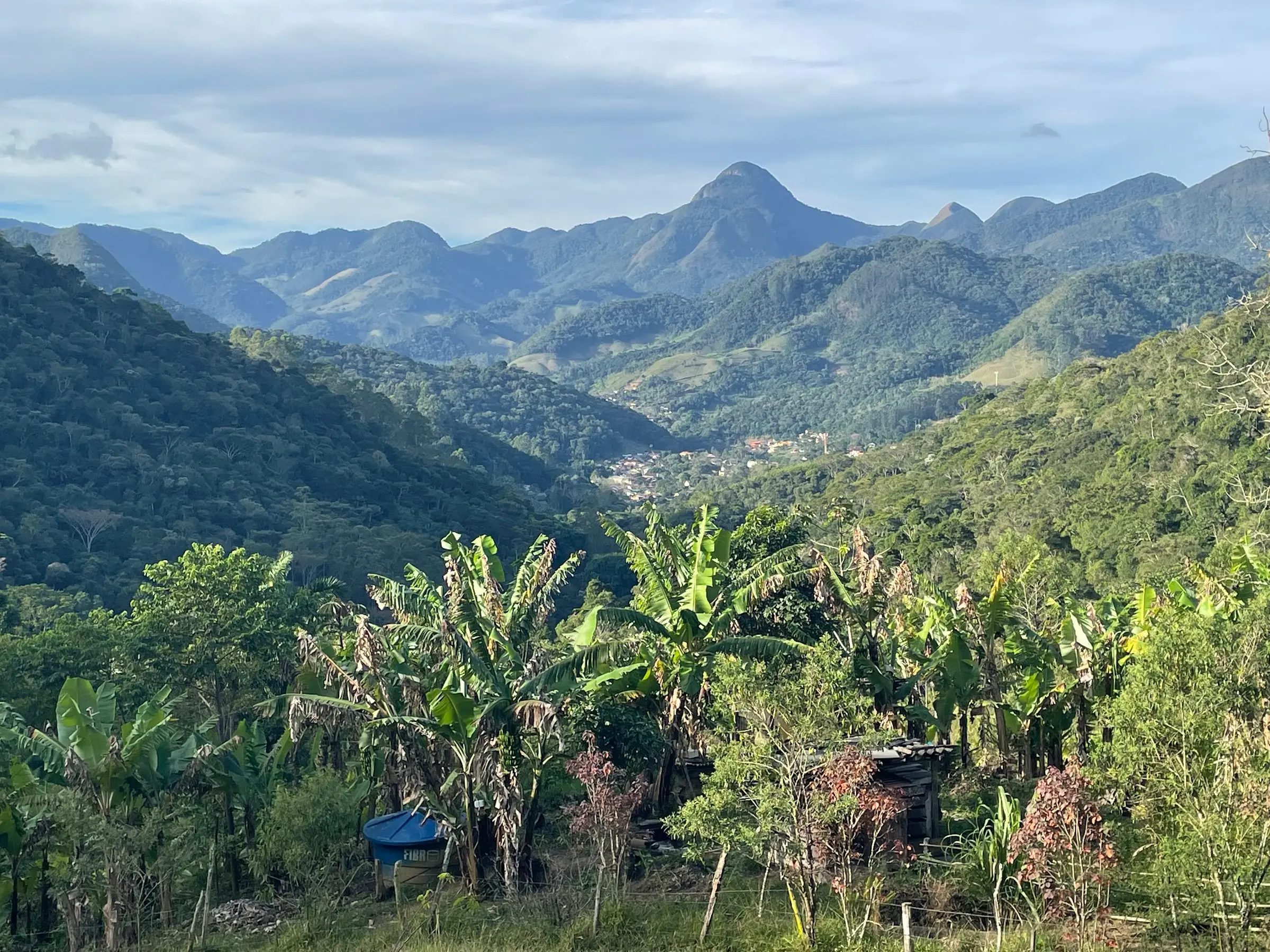
Where we are
In the mountains of Rio de Janeiro state, between Nova Friburgo and Lumiar, in a valley of protected Atlantic Forest with rivers, waterfalls and granite peaks, a few minutes from one of the best areas to eat in the whole serra.
Distances from Papagaia
| MuryRestaurants, cafés, chocolate shops and breweries | 10 min · 5 km |
|---|---|
| Nova Friburgo, town centreHospital, supermarkets and bus station | 30 min |
| Caledônia peakA viewpoint above 2,000 metres | 30 min |
| LumiarWaterfalls, rivers and good food | 30 min |
| São Pedro da SerraRestaurants and live music | 40 min |
| Três Picos State ParkClimbing and trails | 40 min |
| SanaA village of waterfalls | 1h30 |
| Teresópolis and Serra dos ÓrgãosNational park and the Dedo de Deus | 1h30 to 2h |
| Rio de Janeiro and Galeão airportThe city and international flights | 2h30 to 3h |
| Rio das OstrasBeaches | 2h30 |
| Desengano State ParkDark skies for stargazing | 2h30 or more |
| Búzios and Arraial do CaboBeaches and diving | 3h |
Approximate driving times. The last stretch to Papagaia is a dirt road.
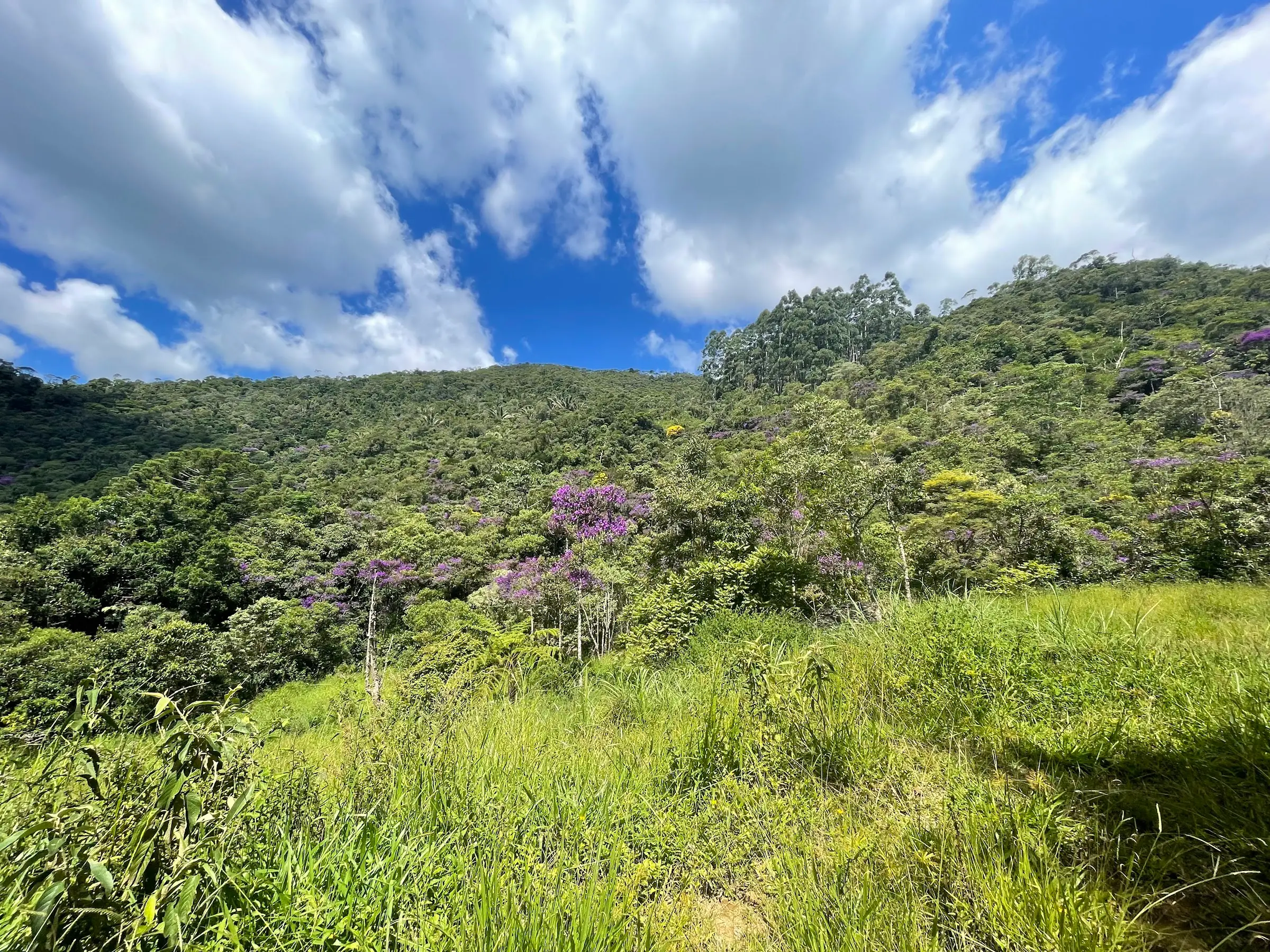
Macaé de Cima, our valley
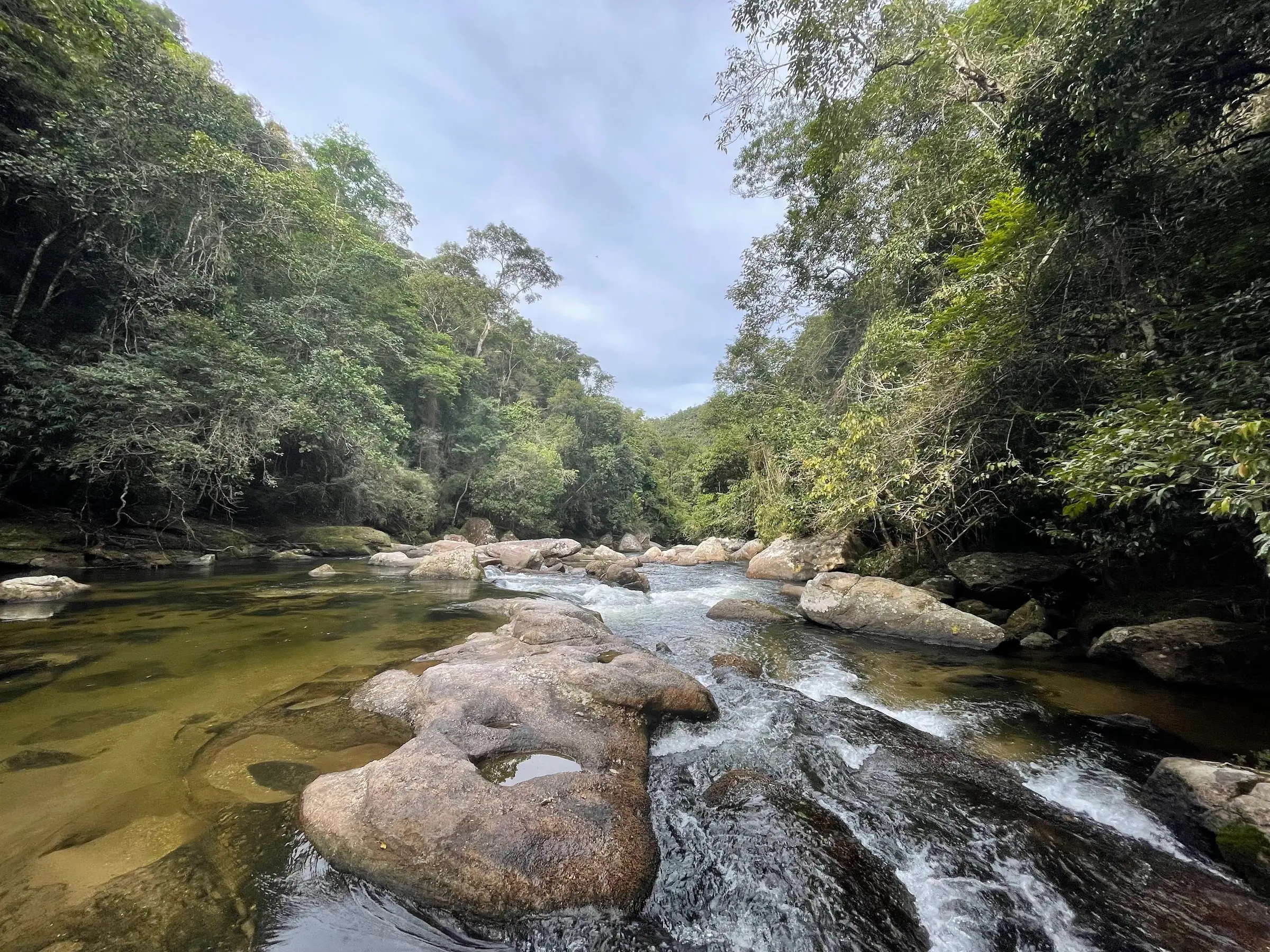
Papagaia sits inside the APA Macaé de Cima, a 35,038-hectare state environmental protection area created to protect the Atlantic Forest and the headwaters of the Macaé river. The Atlantic Forest is one of the richest and most threatened biomes on the planet, and here it still covers the slopes.
More than 200 bird species have been recorded in the area, which is also known for its mountain bike trails and its cold, clean rivers. The Mirandela, which is born at Papagaia, is one of them.
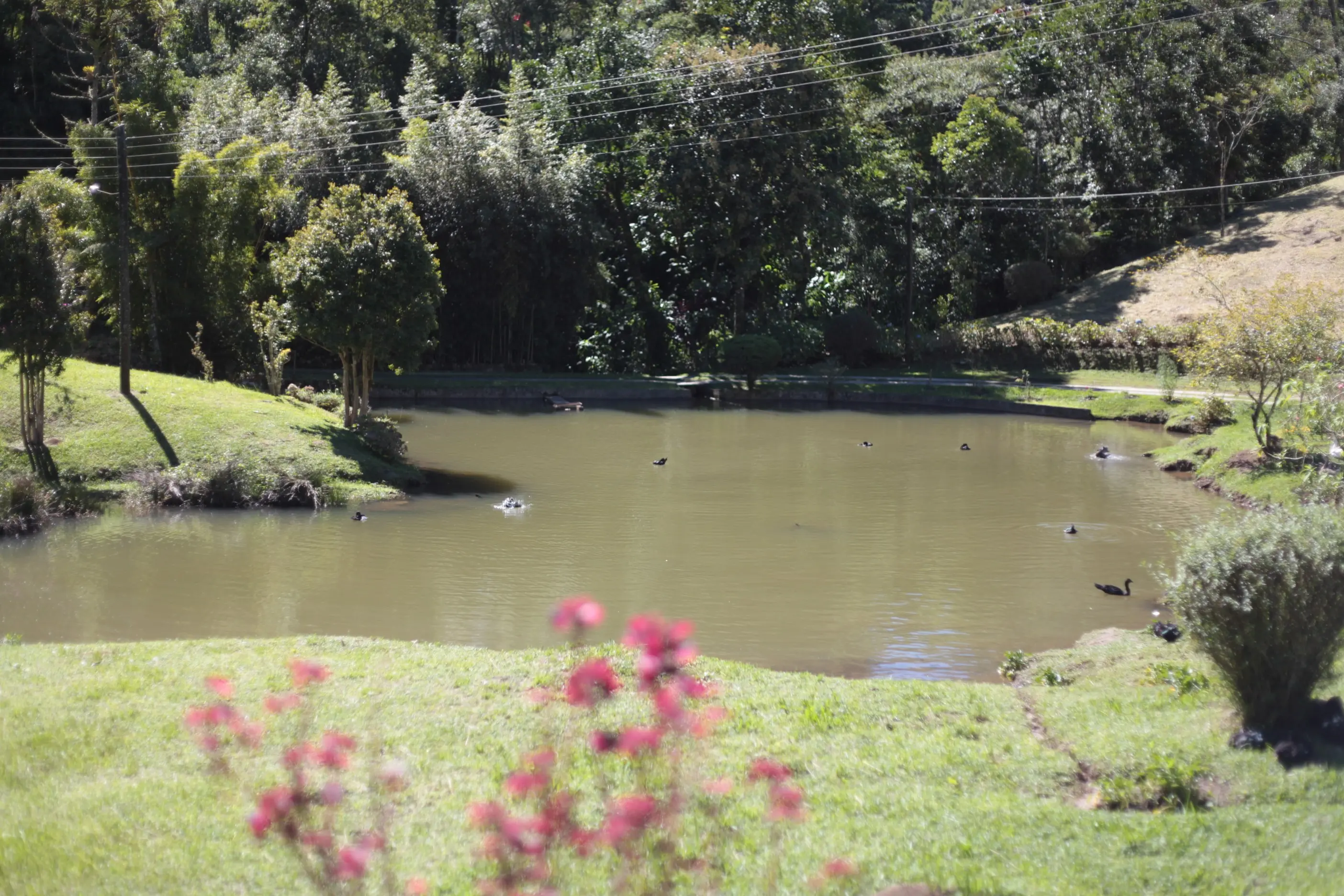
Photo: Ollie Harding, CC BY 2.0, via Wikimedia Commons
Mury, ten minutes away
Mury is the food district of Nova Friburgo. Along the road there are fondue houses and Swiss and German restaurants, trout raised in the local rivers, chocolate shops, artisan cheese makers and craft breweries. In winter it is where everyone goes for dinner.
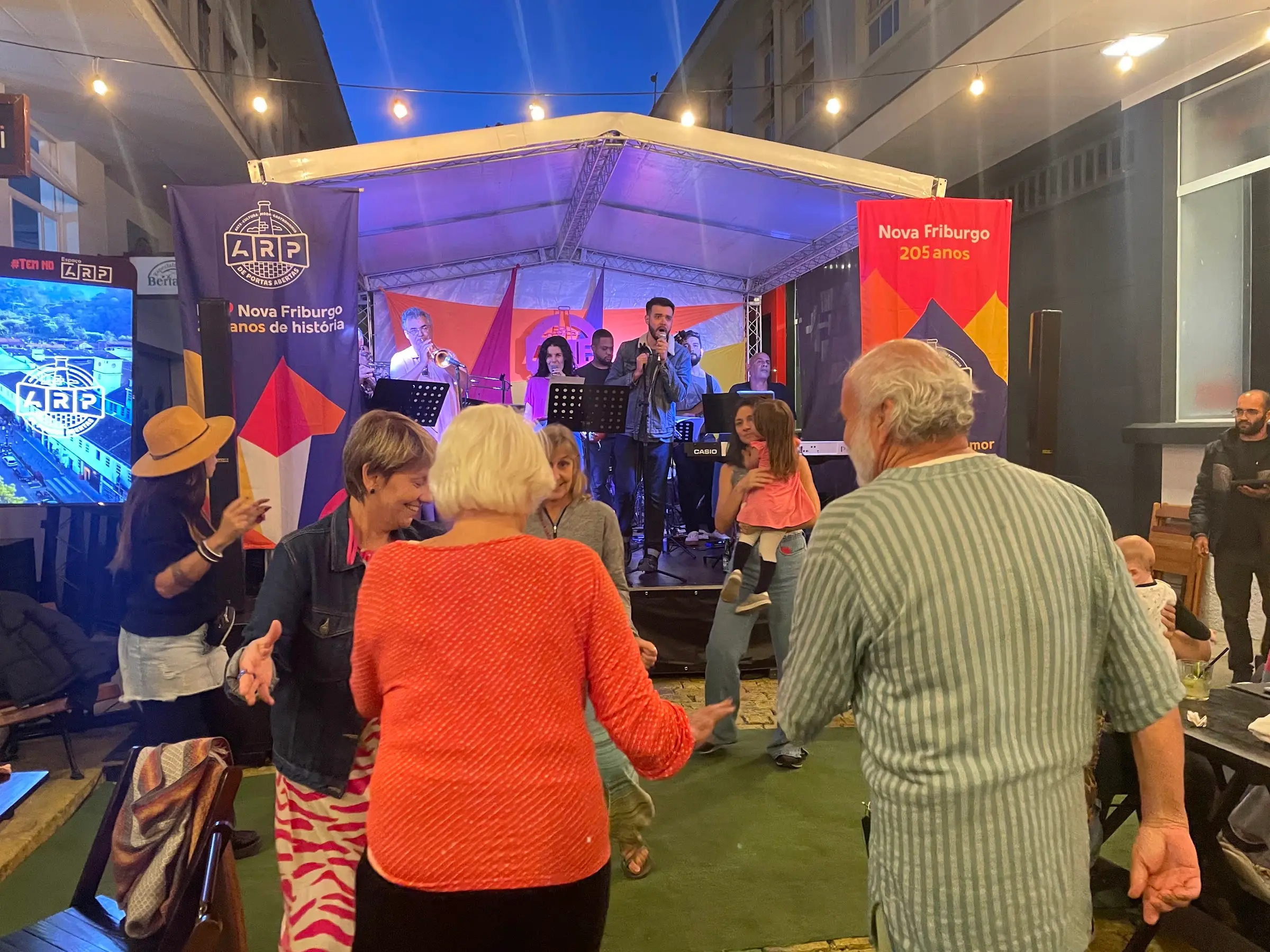
Nova Friburgo, half an hour away
Nova Friburgo was founded by Swiss immigrants in the early nineteenth century and later welcomed German and many other families, which is why it is called the Brazilian Switzerland. It sits at around 850 metres, with a mild climate, and is the state’s largest producer of cut flowers, strawberries and trout.
It is also the town for everyday needs: a hospital, supermarkets, banks, shops and the bus station with coaches to Rio. Every November it holds a trout festival.
Lumiar and São Pedro da Serra
Two neighbouring districts of Nova Friburgo that are the classic waterfall destination of the serra: Poço Feio, Toca da Onça, Poço Belo, and the Encontro dos Rios, where the Macaé river meets the Bonito and where rafting and canoe trips set off. The Pedra Riscada trail climbs to about 1,348 metres and looks out to the coast on clear days.
São Pedro da Serra is known for its restaurants and live music, and Lumiar for its relaxed evenings and guesthouses by the river.
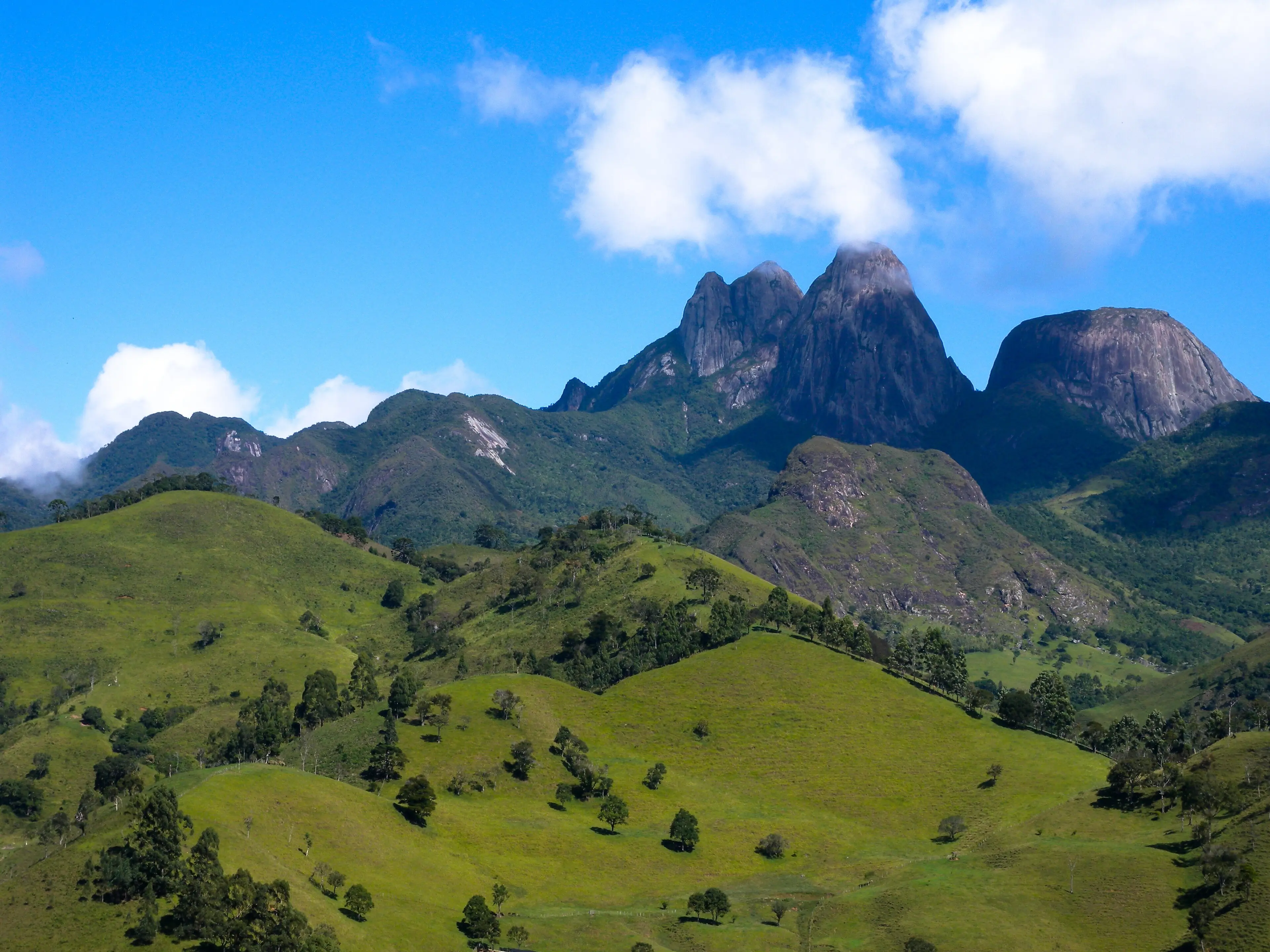
Photo: Jorge Antonio de Oliveira Vicente, CC BY-SA 3.0, via Wikimedia Commons
Três Picos State Park
It is the largest state park in Rio de Janeiro, with around 65,000 hectares of forest and mountains. Pico Maior de Friburgo, at more than 2,300 metres, is one of the highest points of the Serra do Mar, and the park has more than a hundred climbing routes and trails for every level.
Closer still, Caledônia peak, above 2,000 metres, is one of the best-known viewpoints in Nova Friburgo.
A little further
- Sana
An alternative village in Macaé full of waterfalls and trails, about an hour and a half away.
- Teresópolis and Serra dos Órgãos
The national park of the Dedo de Deus, with some of the most famous trails in Brazil.
- Desengano State Park
In 2021 it became the first certified Dark Sky Park in Latin America. On nights between May and August the whole Milky Way is visible.
- The coast
Rio das Ostras, Búzios and Arraial do Cabo, Brazil’s diving capital, are two and a half to three hours away. You can put the mountains and the sea in the same trip.
- Rio de Janeiro
Many people spend a few days in Rio before or after the mountains. Adam has lived in Vidigal for more than ten years and can suggest how to see the city from the inside, with Favela Experience. Favela Inc. →
Getting here
- By car
From Rio de Janeiro and Galeão airport, the usual route goes through Itaboraí and Cachoeiras de Macacu and climbs the mountains on the RJ-116 to Nova Friburgo. From there it is about 30 minutes to Mury and Papagaia, two and a half to three hours in all.
- By bus
Coaches run often from Rio’s Novo Rio bus station to Nova Friburgo, and from there a taxi or ride-share brings you to Papagaia. We can arrange a pick-up if you need one.
- Transfers
For groups, we help arrange transport from Rio or the airport.
When to come
- December to March
Summer: warm days, late-afternoon rain and the waterfalls at their fullest. The best time to swim.
- April and May
Autumn: less rain, clear skies and the purple quaresmeira trees flowering on the slopes.
- June to August
Winter: dry and sunny by day, cold nights, fires, fondue and starry skies.
- September to November
Spring: the flowers come back, so do the birds, and the temperature is among the best of the year.
Want help planning?
Tell us where you are coming from and what you would like to see, and we will help you put together a trip through the mountains, the coast and Rio.
+55 21 97155-7785 · adam@papagaia.org · @papagaiabrasil