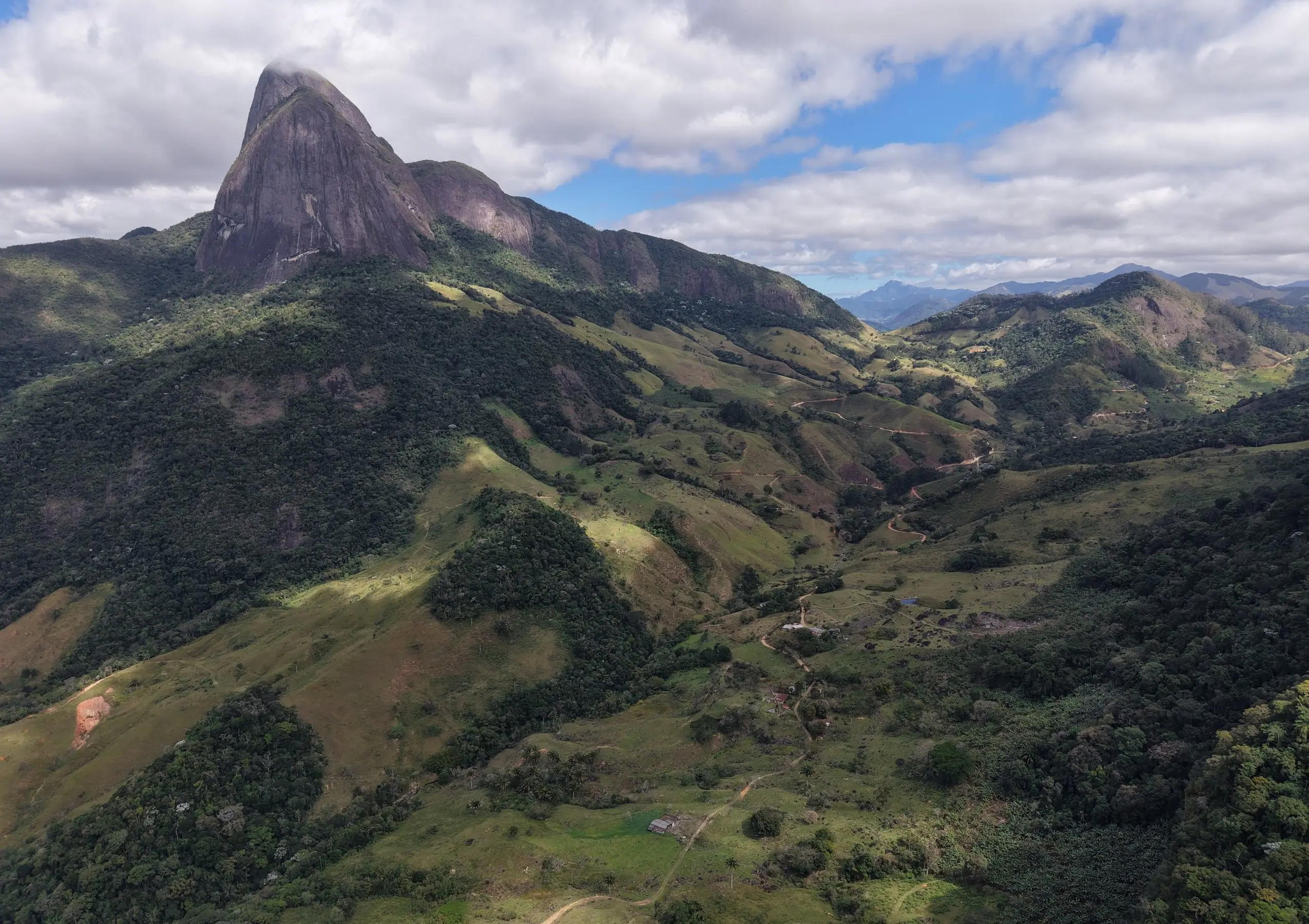
Bringing the forest back, at a larger scale
We are visiting land across the mountains and coast of Rio de Janeiro state where the forest was cut down for pasture and where it can come back. The idea is the same as Papagaia, at a larger scale: protect what is still standing, regenerate what was cleared, and build ecotourism, agroforestry and retreat businesses so that the land pays for its own care.
Why now, and why here
The Atlantic Forest once covered much of Brazil’s coast, and only a fraction of it is left. At the same time, there is still land in Rio state with rivers, springs and waterfalls at prices you can no longer find in Costa Rica or Portugal.
The conservation communities that have worked around the world follow the same pattern: they build on a small, clustered footprint and protect most of the land forever. The protected landscape is not a cost; it is what gives the place, and every home in it, its value.
Protect
Forest, springs and headwaters registered as a private natural heritage reserve (RPPN), protected in perpetuity, which opens the way to conservation finance, payments for environmental services and corporate partnerships.
Regenerate
Degraded pasture becomes productive agroforest: palm heart and banana early on, specialty mountain coffee at the core, and native hardwoods for the long term.
Belong
A limited number of homesites for full-time, part-time and seasonal members, with shared commons, food from the land and a community that governs itself.
Host
A retreat and wellness programme built around the waterfalls, natural pools and trails, bringing life, income and future neighbours to the land.
The first project · under negotiation
Ecovila Frade
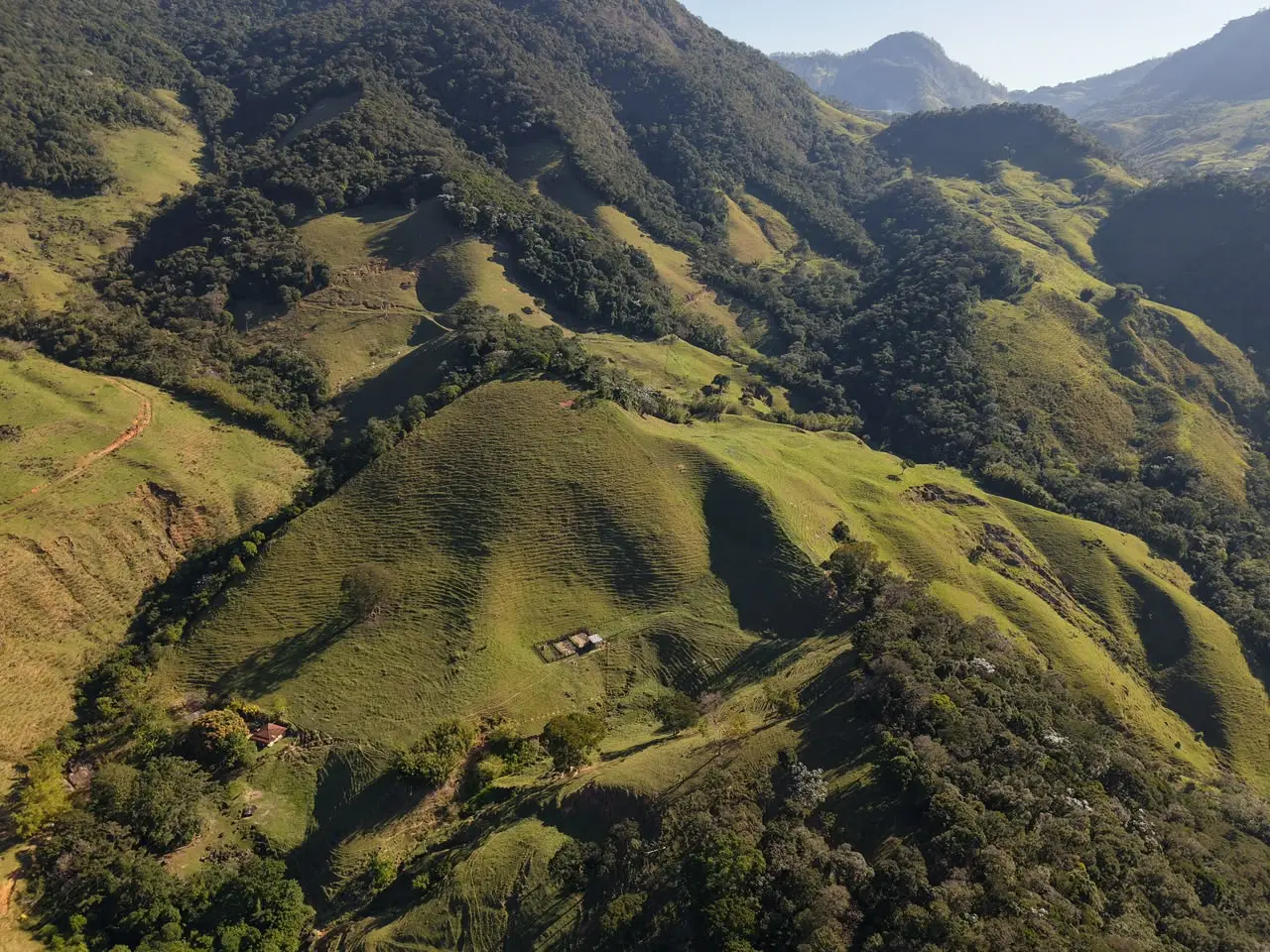
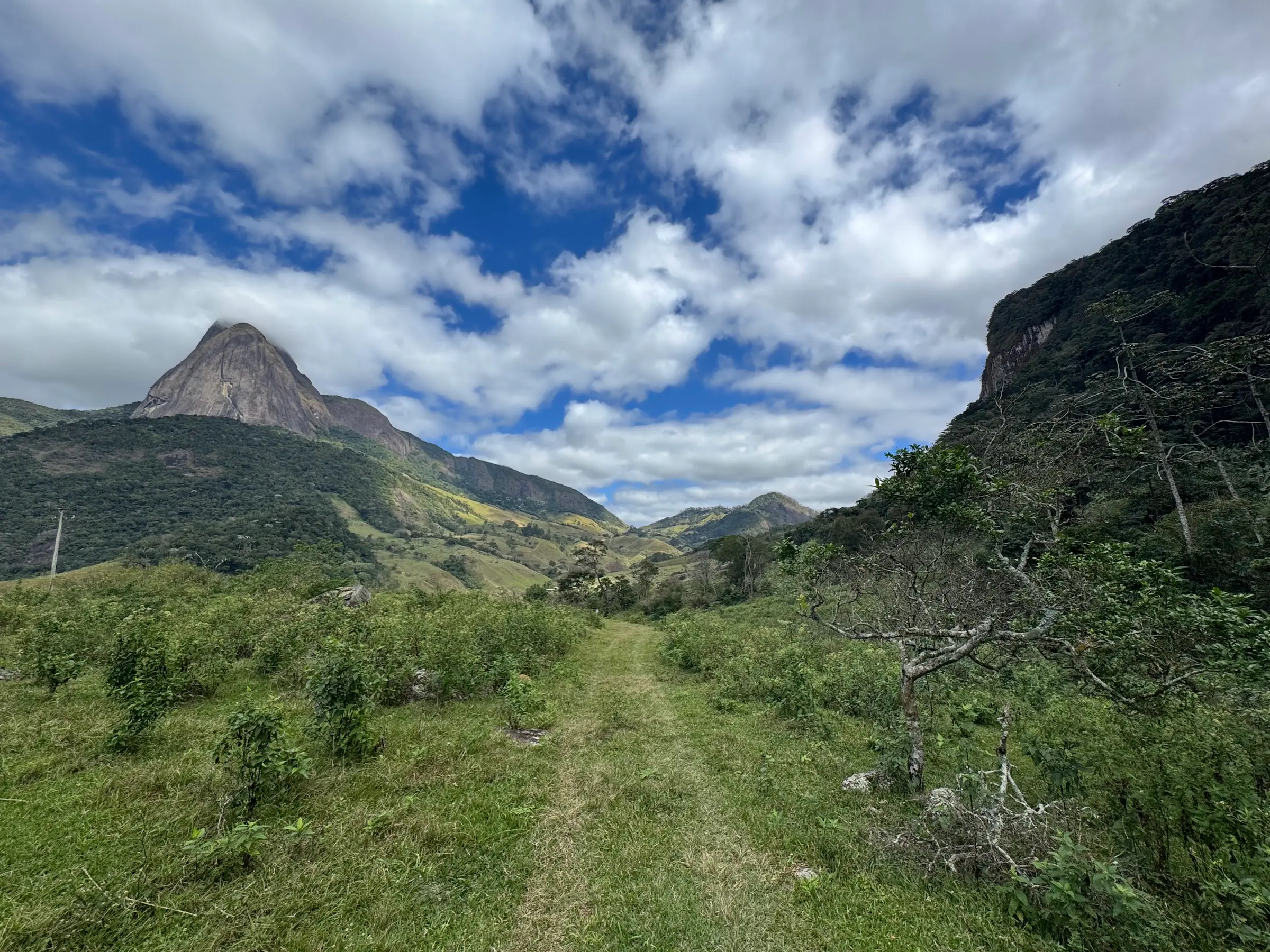
A farm at the foot of Pico do Frade, the highest point in Macaé, in the Serra de Macaé. Most of it is native Atlantic Forest that will be protected for good. The old pasture comes back as forest, and a small village of members lives on a clustered part of the land.
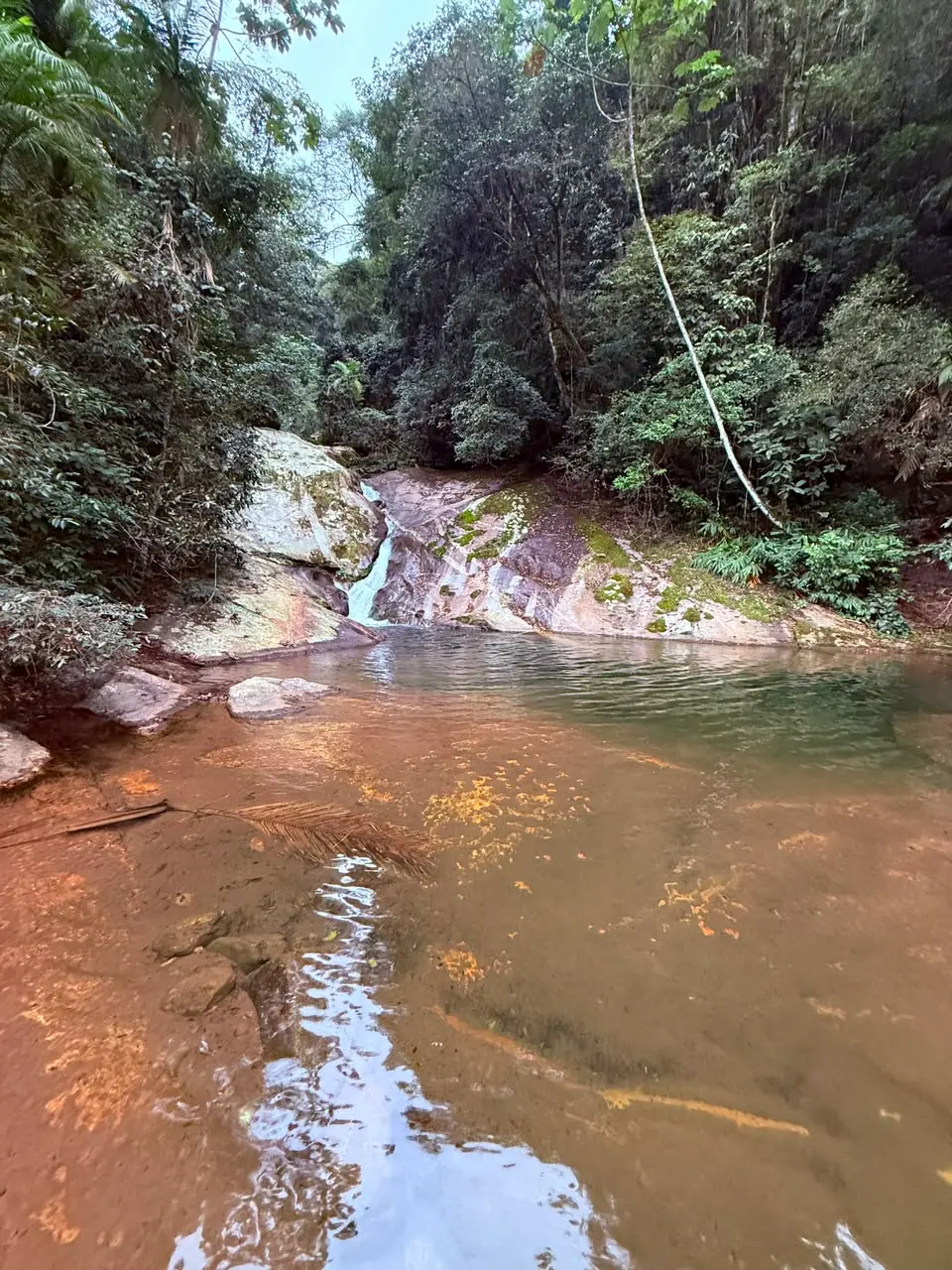
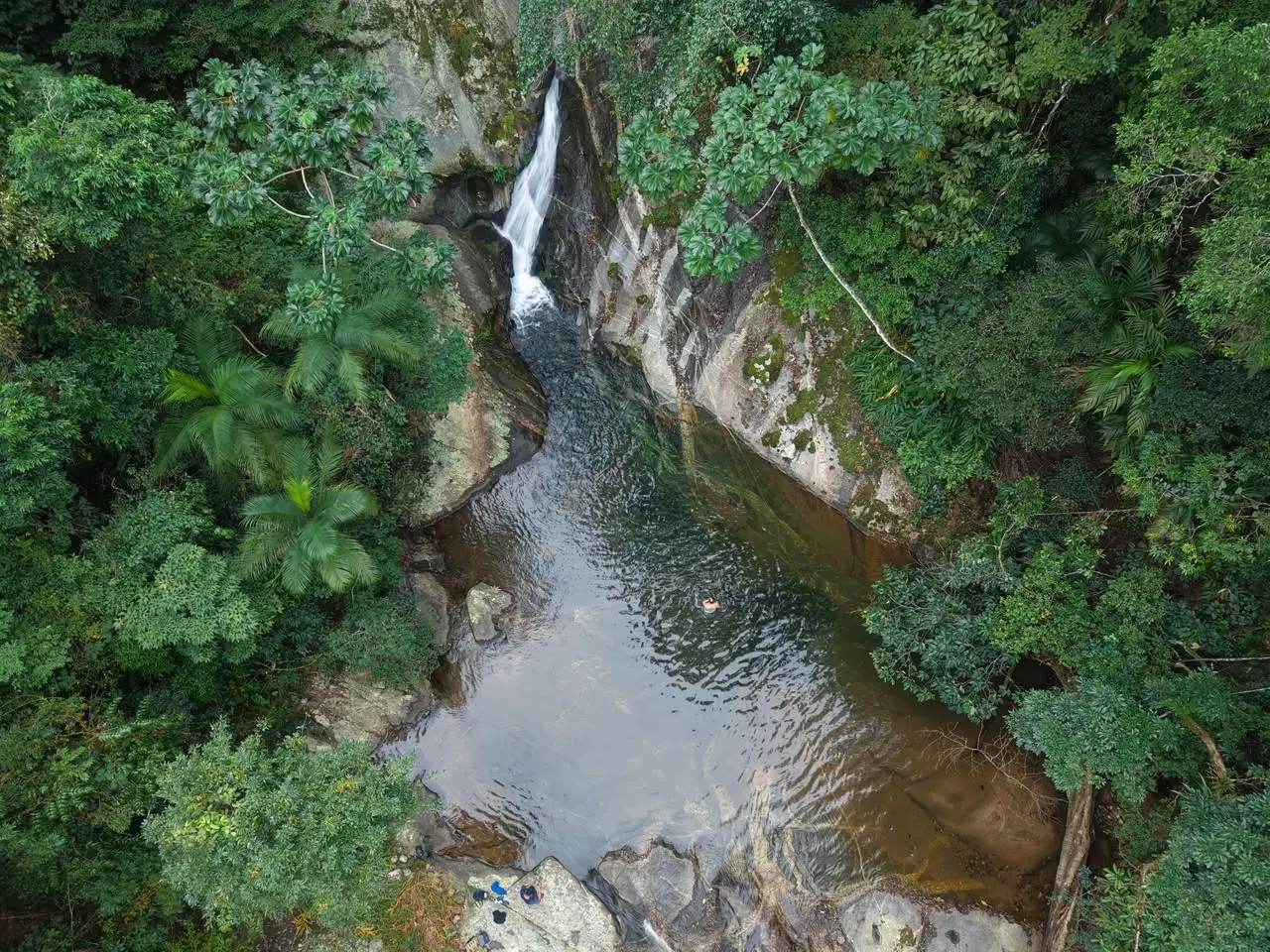
The Crubixais river (in Tupi, the name means river of stones) runs through the middle of the property and forms large natural pools. There is a chain of waterfalls, more than ten springs, monkeys in the forest and a view of the ocean from the upper slopes.
- Size
About 218.7 hectares (about 540 acres)
- Forest and pasture
About 153 ha of native Atlantic Forest and about 67 ha of former pasture to regenerate
- Setting
At the foot of Pico do Frade (1,429 m), Macaé’s highest peak, Serra de Macaé, RJ
- Water
A river through the middle with natural pools; waterfalls of about 3, 10 and 30 m plus a spring-fed fall of about 70 m; more than 10 springs
- Buildings
Three existing houses
- Access
About 1.5 hours to Macaé and about 3.5 hours to Rio’s international airport
- Status
Under negotiation
A universal land
Frade is being planned as a universal land: a place where different religions, spiritual paths and cultures can live side by side and create together, and where people who share the vision can also live. Parts of the land, the river and its pools can be dedicated by different traditions, each shaped by the people who practise it. And over time, part of what the project earns should bring young people and community leaders from Rio’s favelas to the land at no cost.
Ways to take part
- Founding homesite member
A membership with an exclusive right to use a homesite, within a Brazilian-controlled structure, with most of the land permanently protected.
- Founding partner
A stake in the project, plus first choice of homesite and a voice in the master plan.
- Capital partner
A stake as capital only, with returns designed to come from homesite memberships, the retreat and agroforestry businesses and conservation finance.
- Donors and foundations
For people who want to support the protection of forest and water and the programmes with favela and Indigenous communities, kept separate from any real-estate benefit.
- Landowners and local partners
If you own or know of deforested land in the mountains or on the coast of Rio that could be regenerated, we would like to talk.
- Retreat leaders and communities
For people who want to bring groups and help design the part of the land that will hold their practice.
Where this already works
- Serenbe, Georgia, USA
70% of the land preserved in perpetuity.
- La Ecovilla, Costa Rica
Members from more than 60 countries, on a site of similar scale to ours.
- Finca Bellavista, Costa Rica
About 75% kept as shared rainforest, with homesites sold on the rest.
- Reserva do Ibitipoca, Brazil
An internationally recognised regenerative Atlantic Forest destination.
The next steps
We are talking with a small number of founding partners before the purchase closes. It starts with a video call. Then we send the full presentation and the numbers, and if it resonates we host you on the property to see the waterfalls, the river and the view from the ridge for yourself. Terms come last, in documents reviewed by lawyers.
For discussion only, and not an offer to sell, or a solicitation of an offer to buy, any security, quota or real estate. Any offer will be made only through definitive documents reviewed by counsel. Other projects are mentioned as references, not projections.
Start at Papagaia
Papagaia is the place to experience this vision today. Many of our partners got to know the project by spending a few days here.
Stay at Papagaia →Book a call
If you are interested in large-scale land regeneration, as an investor, donor, landowner or partner, write to us and we will set up a video call.
+55 21 97155-7785 · adam@papagaia.org · @papagaiabrasil